Photosensor Proteins
17/05/24 18:45
Mechanism of Action of Photosensor Proteins Governing Light Environmental Response
Cyanobacteria were the first photosynthetic organisms and possess phycobilisomes as light-harvesting antennae for photosynthesis. To maximize light utilization, many cyanobacteria are equipped with a mechanism known as Complementary Chromatic Adaptation (CCA), which alters the pigment composition of phycobilisomes to optimize light absorption under green or red light irradiation.
We initiated our research by focusing on the photosensor proteins that regulate this complementary chromatic adaptation. Our primary interest lies in understanding the mechanism by which signal transduction, triggered by photoreception, is regulated. Undoubtedly, conformational changes in the sensor proteins are deeply involved in this process.
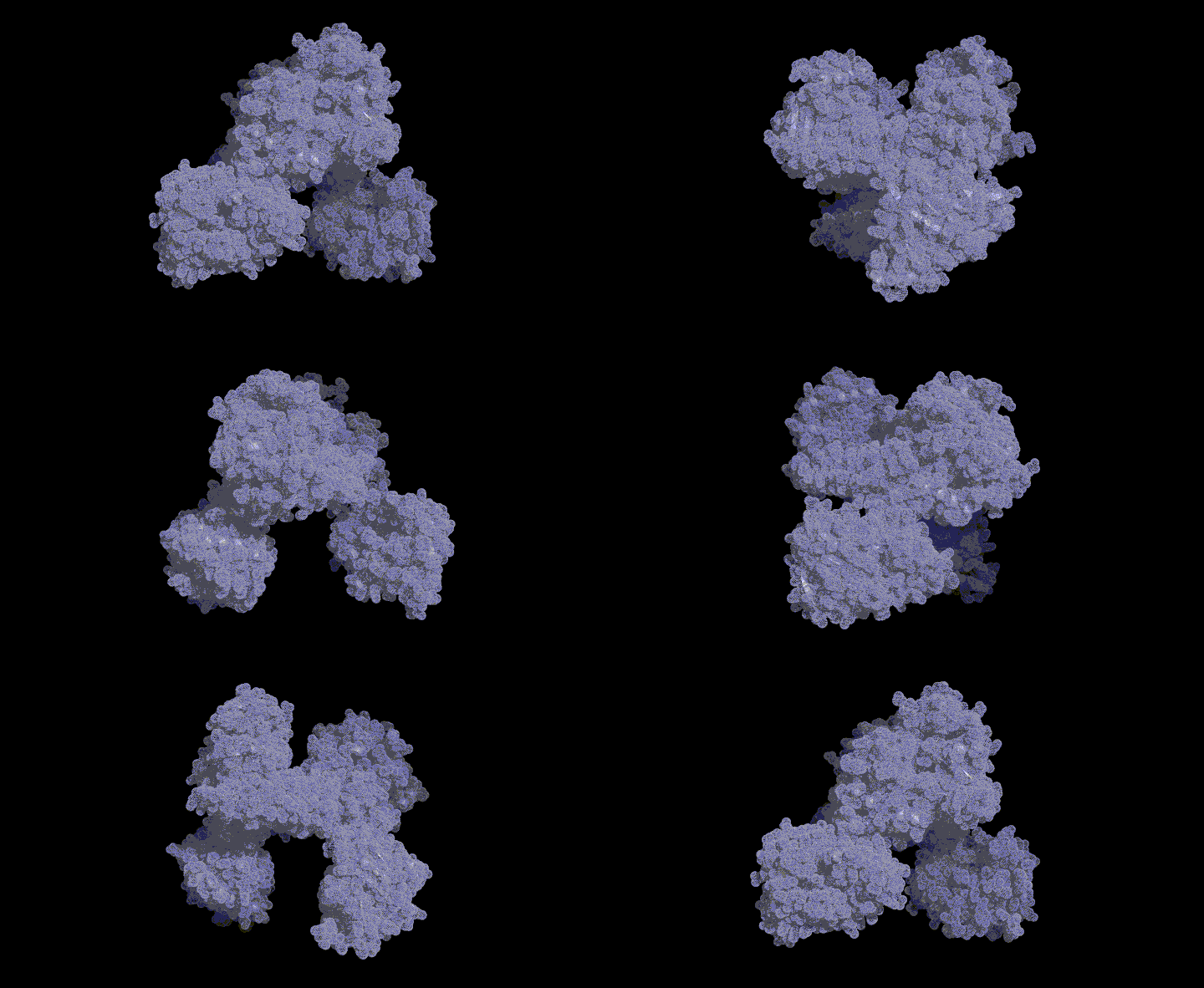
In these photosensor proteins, the core of photoreception consists of a tetrapyrrole pigment bound to a GAF domain, while the histidine kinase domain is responsible for signal transduction. Information regarding these mechanisms of action is critically lacking, and the full-length structure of the photosensor protein remains unknown. We are currently conducting structural and functional analyses of several photosensor proteins derived from cyanobacteria.
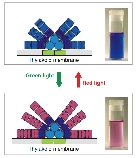
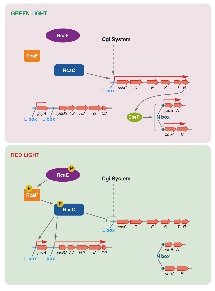
Annu. Rev. Plant Biol.2006, 57:127-150 D.M. Kehoe et al.
To date, our group has conducted structural biology research on the biosynthetic pathways of photosynthetic pigments. The pigments synthesized through these pathways play diverse roles in photosynthetic organisms, one of which is serving as a chromophore in photosensor proteins.
Taking our research to the next level, I have begun working on elucidating the functions of these photosensor proteins. This is a new research theme launched in 2010.
Details regarding our results will be updated in due course.
Cyanobacteria were the first photosynthetic organisms and possess phycobilisomes as light-harvesting antennae for photosynthesis. To maximize light utilization, many cyanobacteria are equipped with a mechanism known as Complementary Chromatic Adaptation (CCA), which alters the pigment composition of phycobilisomes to optimize light absorption under green or red light irradiation.
We initiated our research by focusing on the photosensor proteins that regulate this complementary chromatic adaptation. Our primary interest lies in understanding the mechanism by which signal transduction, triggered by photoreception, is regulated. Undoubtedly, conformational changes in the sensor proteins are deeply involved in this process.
In these photosensor proteins, the core of photoreception consists of a tetrapyrrole pigment bound to a GAF domain, while the histidine kinase domain is responsible for signal transduction. Information regarding these mechanisms of action is critically lacking, and the full-length structure of the photosensor protein remains unknown. We are currently conducting structural and functional analyses of several photosensor proteins derived from cyanobacteria.
Annu. Rev. Plant Biol.2006, 57:127-150 D.M. Kehoe et al.
To date, our group has conducted structural biology research on the biosynthetic pathways of photosynthetic pigments. The pigments synthesized through these pathways play diverse roles in photosynthetic organisms, one of which is serving as a chromophore in photosensor proteins.
Taking our research to the next level, I have begun working on elucidating the functions of these photosensor proteins. This is a new research theme launched in 2010.
Details regarding our results will be updated in due course.