Frontier Science Research Center
Bio-resource Division
http://www.med.miyazaki-u.ac.jp/AnimalCenter/
Summary
To conduct high-quality, reproducible animal experiments, it is necessary to have animal research facilities managed with specialized expertise under environmental conditions that meet internationally recognized standards. Furthermore, appropriate care and use of laboratory animals in accordance with the 3Rs principle, as well as the ethical conduct of animal experiments, are crucial for carrying out animal research at our university appropriately. Our laboratory staff ensure the proper operation and management of the animal research facility, while our faculty members conduct their own research and educational activities.
Research Project
・Development of new animal disease model
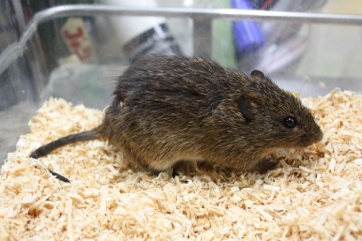
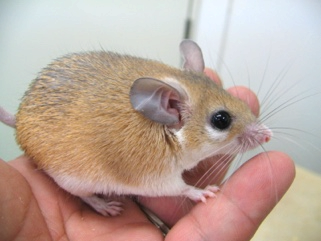
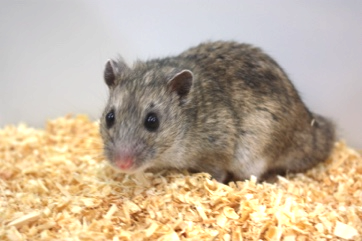
・Maintenance and management of rodent resources derived from wild animals
・The relationship between the gut microbiota and coprophagy in rodents
・Intraspecific diversity of daily torpor in rodents
Lab techniques
・Maintenance, management, and basic techniques for laboratory rodents
・Microbial monitoring of laboratory rodents
(Note: Our animal research facility uses only rodents)
Publicaitons
1) M. Masaki, Y. Suetsugi, C. Koshimoto, M. Morita, A. Shinohara (2025) Daily torpor induced by food restriction in the Chinese hamster, Cricetulus griseus. Mammal Study 50(3), 253-261.
2) Y. Ikai, G. A. Nagura-Kato, S. H. Sakamoto, A. Shinohara, C. Koshimoto (2025) Optimization of inhaled anesthesia for Octodon degus using electroencephalography. Experimental Animals 74(1), 93-103.
3) A. Shinohara, M. Nohara, Y. Kondo, T. Jogahara, G. A. Nagura-Kato, M. Izawa, C. Koshimoto (2019). Comparison of the gut microbiotas of laboratory and wild Asian house shrews (Suncus murinus) based on cloned 16S rRNA sequences. Experimental Animals 68: 531-539.
4) G. A. Kato, S. H. Sakamoto, T. Eto, Y. Okubo, A. Shinohara, T. Morita, C. Koshimoto (2018). Individual differences in torpor expression in adult mice are related to relative birth mass. Journal of Experimental Biology 221: jeb71983