Ryu Takeya, M.D., Ph.D.
takeya@med.miyazaki-u.ac.jp
http://www.med.miyazaki-u.ac.jp/home/pharmacology
Summary
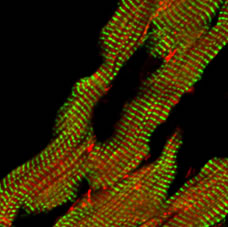
The actin cytoskeleton is vital for a number of biological processes, including morphogenesis, motility, polarity establishment, and modulation of mechanical stress. These various tasks are performed by precise spatio-temporal control of actin polymerization/depolymerization dynamics. However, little is known about the regulatory mechanisms of actin assembly in these processes in vivo. We use a multi-disciplinary approach that combines genetics, biochemistry, histology, and pharmacology to study these problems from the molecular to organism level.
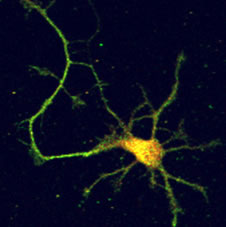
We are also interested in understanding the role of insulin signaling in the brain. Recentstudies have revealed that insulin signaling is involved in cognitive functions underphysiological and pathological conditions. We are addressing this issue from the uniquestandpoint that insulin is synthesized within the brain.
Research Projects
- Actin assembly mechanisms
- Actin dynamics in cardiomyocytes and non-muscle cells
- Insulin signaling in the brain
Lab Techniques
- Basic molecular biology techniques
- Basic techniques for mammalian cell culture
- Maintenance and handling of genetically modified mice
- Expression and purification of recombinant proteins
- Primary culture of cardiomyocytes and neurons
- Morphological and histological observation techniques
Publications
- Syaban MFR, et al. Structural basis underlying the autoinhibition of the formin FHOD1 and its phosphorylation-dependent activation. J. Biol. Chem. 2026; 302: 111109. doi:10.1016/j.jbc.2025.111109.
- Nakagawa H, et al. The expression of the formin Fhod3 in mouse tongue striated muscle. Cell Struct. Funct., 2024; 49: 111-122. doi: 10.1247/csf.24044.
- Sakata K, et al. Differential effects of the formin inhibitor SMIFH2 on contractility and Ca2+ Syaban MFR, et al. Structural basis underlying the autoinhibition of the formin FHOD1 and its phosphorylation-dependent activation. J. Biol. Chem. 2026; 302: 111109. doi:10.1016/j.jbc.2025.111109
- Nakagawa H, et al. The expression of the formin Fhod3 in mouse tongue striated muscle. Cell Struct. Funct., 2024; 49: 111-122. doi: 10.1247/csf.24044
- Sakata K, et al. Differential effects of the formin inhibitor SMIFH2 on contractility and Ca2+ handling in frog and mouse cardiomyocytes. Genes Cells. 2021; 26:583-595. doi: 10.1111/gtc.12873
- Sulistomo HW, et al. Fhod3 controls the dendritic spine morphology of specific subpopulations of pyramidal neurons in the mouse cerebral cortex. Cerebral Cortex 2021;31:2205–2219. doi:10.1093/cercor/bhaa35
- Sanematsu F, et al. Fhod1, an actin-organizing formin family protein, is dispensable for cardiac development and function in mice. Cytoskeleton (Hoboken). 2019 Feb;76(2):219-229. doi:10.1002/cm.21523
- Matsuyama S, et al. Interaction between cardiac myosin-binding protein C and formin Fhod3. Proc Natl Acad Sci U S A. 2018 ; 115: E4386-95. doi: 10.1073/pnas.1716498115
- Sulistomo HW, et al. Formin homology 2 domain-containing 3 controls neural plate morphogenesis in mouse cranial neurulation by regulating multidirectional apical constriction. J Biol Chem. 2019; 294:2924-2934.
- Ushijima T, et al. The actin-organizing formin protein Fhod3 is required for postnatal development and functional maintenance of the adult heart in mice. J Biol Chem. 2018; 293:148-162.
- Kan-o M, et al. Mammalian formin Fhod3 plays an essential role in cardiogenesis by organizing myofibrillogenesis. Biol. Open 2012; 1: 889-896.
- Taniguchi K, et al., Mammalian Formin Fhod3 Regulates Actin Assembly and Sarcomere Organization in Striated Muscles. J Biol Chem. 2009; 284: 29873-29881.
- Takeya R, et al. The mammalian formin FHOD1 is activated through phosphorylation by ROCK and mediates thrombin-induced stress fibre formation in endothelial cells. EMBO J 2008; 27: 618-628.